Brånemark System, NobelSpeedy & legacy platforms
What you probably have if your implants went in more than a decade ago
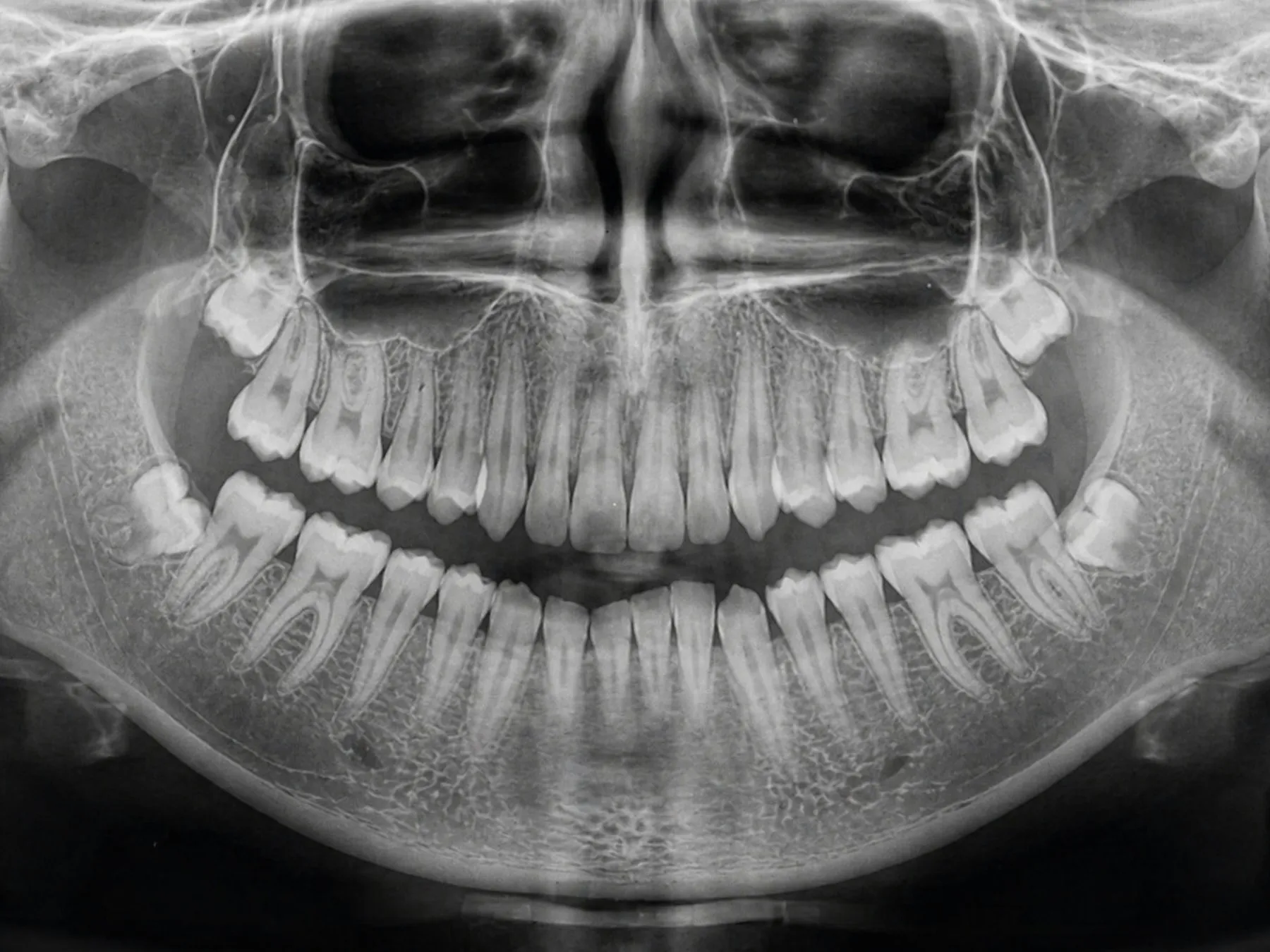
If you had implants placed in the 1990s or 2000s, they were most likely a Brånemark System implant with an external hex connection, a NobelSpeedy, or a Replace with an internal tri-channel connection. These systems are not obsolete curiosities — they are the historical foundation of osseointegrated implantology, millions were placed, and a great many are still working. This page exists for one practical reason: when something needs replacing on an older implant, identifying which connection you have is the whole problem, and the connection is usually visible on an X-ray.
Clinical situations where it may be considered
- A crown or bridge has come loose on an old implant
- The most common reason patients arrive here. The fixture is often perfectly sound and only the component above it needs replacing.
- A prosthetic screw has fractured
- Requires a screw matching the connection. Identifying the connection is the whole task.
- Adding a new implant next to old work
- The new implant does not have to match the old one unless they will be joined under one bridge.
- An old full-arch bridge needs remaking
- Brånemark-era full-arch work is still in service in large numbers, and remaking the bridge needs the platform identified accurately.
Why a clinician may select it
- These systems are not selected for new cases — they are encountered in patients already treated
- External hex remains widely recognised, and components are still obtainable in many markets
- Brånemark-era full-arch protocols are the historical basis of the fixed bridge work done today
- Identifying the legacy platform correctly is what makes a conservative repair possible
When another system may be selected instead
For a new implant today, a modern internal conical connection is the ordinary choice: platform shifting is integral rather than added later, the microgap behaves differently under load, and screw loosening is managed better by the connection geometry. The legacy systems are documented here because patients have them, not because they would be chosen now. Where an old implant is failing rather than merely needing a component, the discussion is about removal, grafting and a modern replacement rather than about preserving the platform.
Why this page exists
Most implant information is written for people deciding on treatment. This one is for people who had treatment done, years ago, and now have a problem.
The Brånemark System is where modern implant dentistry began — Per-Ingvar Brånemark observed osseointegration in 1952, the first osseointegrated dental implants were placed in Gösta Larsson in 1965, and the system built on that work carried the field for decades. Millions of these implants were placed. A great many are still in function, doing exactly what they were designed to do.
What has changed is not their integration. It is that the components sitting on top of them wear, loosen and occasionally fracture — and replacing one requires knowing which connection you have.
The three connection families
This is the section a dentist actually needs, and it is why a radiograph is so useful.
External hex
The classic Brånemark System connection, and some NobelSpeedy Groovy implants. A hexagonal post projects upward from the top of the implant, and the abutment fits over it.
On a radiograph the implant top appears flat with the abutment seated above it, and the join sits at or near bone level. Distinctive once you know what to look for.
Some NobelZygoma variants with a 45° head also use an external hex.
Internal tri-channel
NobelReplace, Replace Select, NobelSpeedy Replace and NobelReplace Platform Shift. Three channels inside the implant provide anti-rotation, and the abutment seats down into the implant rather than over it.
Internal conical
The modern architecture, used across NobelActive, NobelParallel CC, NobelReplace CC and, in a trioval form, N1. A tapered abutment wedges into a matching taper inside the implant.
These three are not interchangeable in any direction. A component for one will not seat in another, which is precisely why identification comes before ordering anything.
What you probably have, by era
Approximate, and useful as a starting point rather than an answer:
- 1980s to mid-1990s — Brånemark System, external hex, machined surface
- Late 1990s to 2000s — Brånemark with TiUnite surface, Replace Select, early NobelReplace with internal tri-channel
- 2000s to early 2010s — NobelSpeedy in full-arch and soft-bone work, NobelReplace, NobelActive from 2008
- 2010s onward — internal conical connections across the range
If you know roughly when and where you were treated, that narrows the field considerably before anyone takes an image.
What is still obtainable
More than patients expect, and this is the genuinely reassuring part.
External hex is one of the most widely recognised connections in implant dentistry. Its geometry has been used by many manufacturers, components remain available in most markets, and a dentist who identifies an external hex has a real chance of sourcing what they need.
Internal tri-channel is more specific to this family, and availability varies by country. Still frequently obtainable, but worth checking before assuming.
Brand continuity helps here. A manufacturer that has been supplying the same platforms for decades is a different proposition from one that may not be trading when you need the part — which is one of the more honest arguments for an established manufacturer, and it applies retrospectively as much as prospectively.
The maintenance question
Older implants are not exempt from what every implant needs.
Bone loss around an implant placed in 1998 behaves the same way as bone loss around one placed last year, and it is just as manageable when found early. If you have implants you have not had reviewed for several years, that is the appointment worth making — not because something is necessarily wrong, but because the alternative is finding out when it becomes obvious.
What to do if you have old Nobel work
- Contact the clinic that treated you first. Many keep records for years. Ask for the system name, diameters, lengths and positions.
- If that fails, have a periapical radiograph taken. The connection geometry is often visible enough to narrow the system to a small shortlist.
- Take what you have to a dentist who does implant work, rather than to general practice — the identification is a familiar exercise for someone who does it regularly.
- Keep whatever you recover. Photograph it and store it somewhere durable.
There is a fuller walkthrough of the identification process, including what a clinician is actually comparing on the image, in our article on identifying an existing implant.
If you are considering treatment abroad with old work in place
Bring the imaging, and bring whatever records you have. A clinic planning new implants alongside existing ones needs to know what the old ones are — particularly if anything will be joined to them under a shared bridge, where the components genuinely have to work together.
The clinical team at Taki Dent works across the full Nobel Biocare range including the legacy platforms, which means an older implant is a case to identify rather than a reason to start again.
A final diagnosis and treatment plan can only be confirmed after clinical examination and appropriate radiological assessment.