NobelActive®
Built for the sockets other implants find difficult
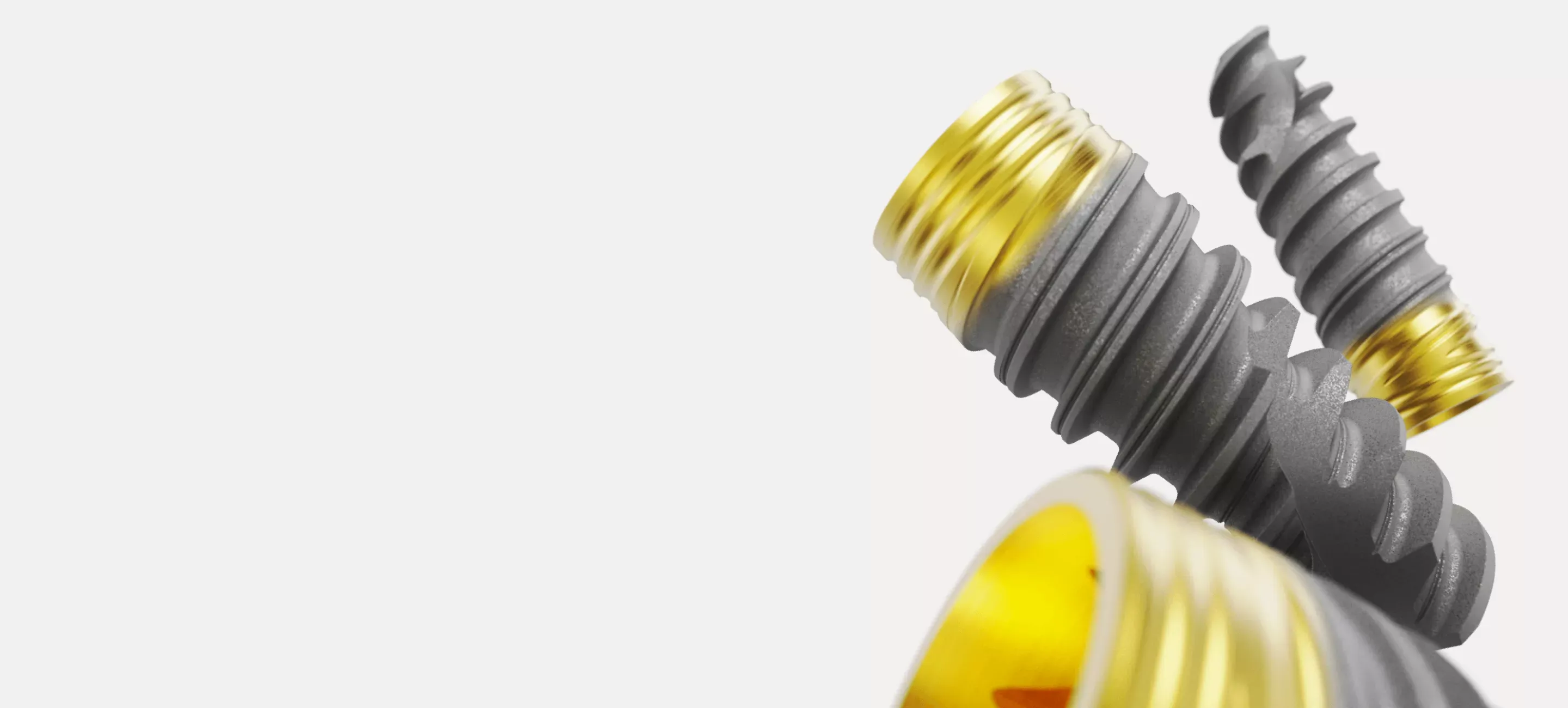
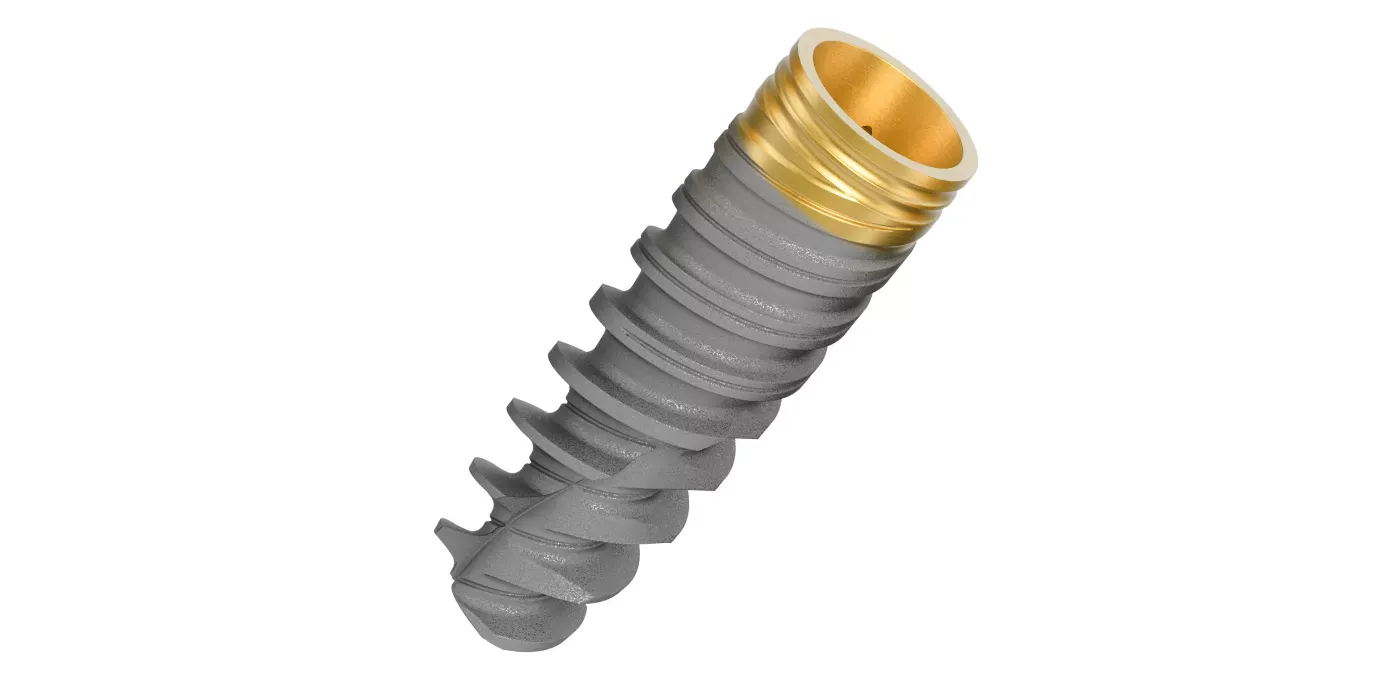
NobelActive is a tapered implant with an aggressive, condensing thread design. As it is placed, it compacts the bone around it rather than simply cutting a channel through it. That matters in two situations in particular: bone that is soft, and a socket that has just been vacated by an extracted tooth. Both are situations where an implant can struggle to sit tightly on the day it is placed, and tightness on day one — primary stability — is what decides whether a temporary tooth can be fitted straight away or whether healing has to come first. Whether NobelActive is the right choice for you is a clinical decision made by the treating team after examination and radiological assessment, not a preference you need to arrive with.
Clinical situations where it may be considered
- Extraction sockets
- A socket is wider than the implant and irregularly shaped. A condensing design may be considered where the remaining bone walls can be engaged.
- Soft bone
- In the posterior upper jaw, bone is often low in density. Compacting the bone during placement may be considered to improve the fit achieved on the day.
- Immediate placement
- Placing an implant at the same visit as the extraction may be considered when the socket and surrounding bone allow it.
- Immediate loading
- Fitting a temporary tooth soon after surgery may be considered only when the stability measured at placement meets the loading criteria the clinical team works to.
Why a clinician may select it
- The socket morphology leaves limited bone to engage, and a condensing design can use what remains
- The measured insertion torque needs to be high enough to consider an immediate temporary tooth
- Bone density in the planned position is low and a parallel-walled implant may not achieve the same initial fit
- The implant's angulation needs adjusting during insertion so that the crown emerges in the right position
- The prosthetic plan requires a conical connection for the abutment design chosen
When another system may be selected instead
NobelActive is not automatically selected for every patient. Where the ridge is healed, regular in density and generously wide, a parallel-walled system such as NobelParallel may be preferred because it removes less bone and is more forgiving of small errors in preparation. Where the case is a straightforward single tooth in good bone, NobelReplace may be the simpler route. And where the treating team is working to the N1 protocol, site preparation itself differs. The system is chosen to fit the anatomy and the restorative plan — not the other way round.
What “primary stability” actually means
When an implant is placed, it is screwed into prepared bone. How tightly it sits at that moment is called primary stability, and it is measured — usually as insertion torque, sometimes also as a resonance frequency reading. It is not a marketing term. It is a number the surgeon reads during your operation, and it changes what happens next.
If the reading is high, a temporary tooth may be fitted quickly, because the implant is unlikely to move under light load while the bone heals around it. If the reading is low, the implant is left to heal undisturbed, and the tooth comes later. Neither outcome is a failure. The second one is simply the safer sequence for that particular jaw, and a clinician who fits a temporary tooth regardless of the reading is taking a risk with your treatment.
This is the whole reason implant bodies are shaped differently from one another. A condensing, tapered design like NobelActive is an attempt to get a usable reading in bone where a straight-walled implant might not.
Why extraction sockets are the difficult case
A tooth socket is not an implant-shaped hole. It is wider at the top, tapers unevenly, and its walls may be thin or partly missing where infection or a fracture has damaged them. Dropping an implant into it does not, on its own, produce a stable result — the implant has to engage bone somewhere, usually beyond the tip of the old root or against whatever walls remain.
A design that compacts bone as it advances gives the surgeon more to work with in that situation. It does not make every socket suitable. If too little bone remains, the honest answer is to graft the site and place the implant later, and being told that is a sign of careful planning rather than a setback.
What the manufacturer reports, and how to read it
Nobel Biocare reports a 97.9% mean survival rate for NobelActive across 107 clinical studies involving more than 22,500 implants in over 6,300 patients, with follow-up of up to 12 years.
That is a substantial body of material and it is worth reading precisely. It is a manufacturer aggregate assembled across separate studies with different patients, protocols and follow-up periods — not one homogeneous trial, and not a figure that applies to your jaw. Survival also counts an implant still being in place, which is a less demanding measure than success.
Independent work adds nuance rather than confirmation. A retrospective study of 113 NobelActive implants found more crestal bone remodelling in the group placed above 55 Ncm insertion torque — a reminder that this design’s strength, its ability to generate grip, is also the thing that has to be controlled. A three-year randomised comparison against NobelSpeedy reported lower marginal bone remodelling for NobelActive, on a small sample.
Two variants worth knowing about
NobelActive 3.0 is made for narrow interradicular and mesiodistal spaces — maxillary lateral incisors, mandibular central and lateral incisors. FDA indications restrict it to single-unit restorations, so it cannot be splinted into a bridge.
NobelActive WP carries a 5.5 mm platform for posterior sites needing a wider molar emergence profile.
Surface options
NobelActive is available with TiUnite, the anodised surface introduced in 2000 with the longest documentation behind it, or TiUltra, launched in 2019. Aggregated figures for the system may combine both, so long-term data for the implant body is not the same as long-term data for the newer surface.
What this page cannot tell you
It cannot tell you whether NobelActive suits your jaw. That requires clinical examination and appropriate radiological assessment — a panoramic radiograph at minimum, usually a CBCT scan for implant planning, because a two-dimensional image cannot show the width of bone available or the position of the nerve running through the lower jaw.
If you send those images, the clinical team at Taki Dent can review them and prepare a preliminary treatment outline: the likely approach, the number of implants, the expected visits and a cost range. The final implant system is selected by the clinical team.