Nobel Biocare N1™
A system, not just a fixture — the site preparation changes too
N1 is the newest system in the Nobel Biocare range, and the important thing to understand about it is that it is not simply a differently shaped implant. The manufacturer defines it as a complete system: a dedicated site-preparation protocol, an implant body with a trioval rather than round cross-section, and its own restorative components. That means a clinic using N1 has adopted a different way of preparing the bone, not just a different screw. Whether it is appropriate for your case is a clinical decision taken by the treating team after examination and radiological assessment.

Clinical situations where it may be considered
- Clinics working to the N1 protocol
- The system is used where the treating team has adopted its instrumentation and preparation sequence, rather than case by case alongside conventional drilling.
- Single-tooth restoration
- May be considered where the site and the restorative plan suit the N1 platform.
- Multi-unit restoration
- May be considered where the components required for the planned prosthesis are available in the N1 range.
- Planned digital workflow
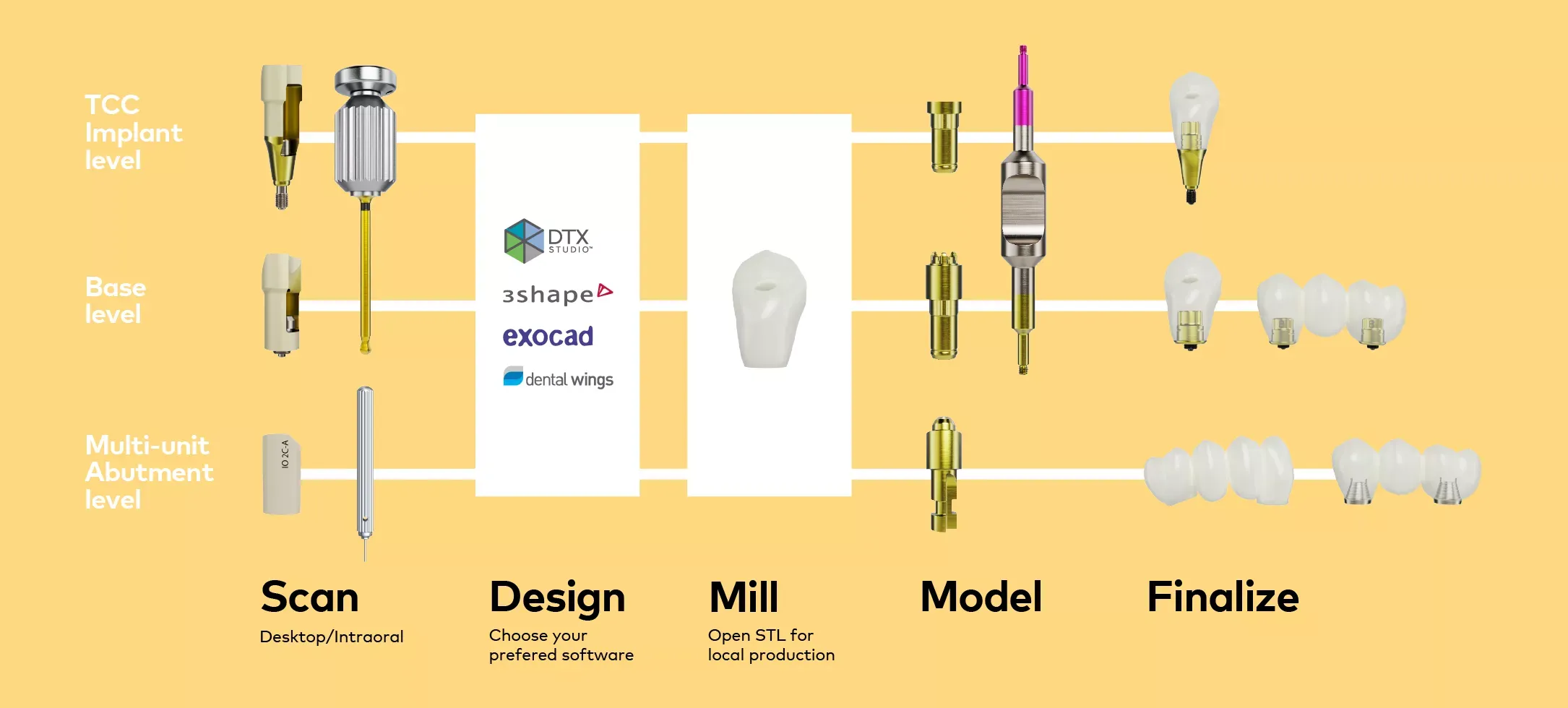
- The system is presented by the manufacturer as part of a digital planning and restorative workflow.
Why a clinician may select it
- The clinic has adopted the N1 preparation protocol and instrumentation as its routine approach
- The restorative components required for the planned prosthesis exist in the N1 platform
- The planned workflow is digital from planning through to the final restoration
- The case is being planned from the prosthesis backwards, and the N1 platform fits that design
When another system may be selected instead
N1 is a system-level commitment rather than an implant a clinic can substitute case by case. Where the treating team's established protocol is conventional drilling, NobelActive, NobelParallel or NobelReplace will be the systems in routine use, and each of those has a long record behind it. Where the anatomy is the deciding factor — a fresh socket, soft bone, severe upper-jaw resorption — the choice is driven by that anatomy, not by which system is newest.
Why “system” is the operative word
Most implant marketing describes the implant. N1 is described by its manufacturer as a set of things that only work together: instruments that prepare the bone in a particular way, an implant shaped to sit in the site those instruments create, and restorative parts made for that implant’s platform.
For a patient, the practical consequence is straightforward. A clinic does not casually add N1 to a shelf of other options — adopting it means retraining the surgical sequence and stocking a different set of components. So when a clinic offers it, that reflects a decision about how it works, and when a clinic does not, that is not a gap in its capability.
Newer is not the same as better for your case
It is tempting to read a release date as a ranking. It is not one. The systems that have been in use for fifteen or twenty years carry something a new system cannot yet have: a long record of what happens to them over that period, in many mouths, in the hands of many surgeons.
That matters for implants in particular, because the questions that count — how the bone behaves around the implant after ten years, whether components remain available if something needs replacing — can only be answered by time. A clinician weighing N1 against an established system is weighing a newer design against a longer record, and reasonable clinicians reach different conclusions.
What level of evidence sits behind it
This deserves stating plainly, because it is where enthusiasm for N1 tends to outrun the record.
The claims about the trioval neck reducing cortical stress and supporting rapid osseointegration rest substantially on preclinical work — bench testing in bone surrogates and animal studies. The manufacturer says so on its own pages, which is to its credit. Preclinical findings are how a design gets developed; they are not long-term human outcomes.
N1 entered the market around 2020–2021. It does not have the ten to twenty years of independent clinical data that NobelActive, the Replace family or the Brånemark System have accumulated. So:
“N1 is Nobel Biocare’s most advanced system” — a defensible marketing position “N1 is Nobel Biocare’s most proven system” — not true
Both statements get made. Only one survives contact with the evidence.
A recall worth knowing about
In 2025 a Class II recall affected certain N1 TiUltra TCC RP products: a moulding defect in the plastic packaging component holding the OsseoShaper could create a sharp protrusion capable of piercing the blister and breaching the sterile barrier.
The recall concerned packaging, not implant design — not the titanium, the surface or the connection. Affected lots should not be used, and a clinic’s job is to check lot numbers against the notice and inspect packaging on arrival. We publish it because the record is public and a site that omits it is telling you less than the FDA database will. See our regulatory record.
Getting a specific answer
What can be said about your case comes from clinical examination and appropriate radiological assessment, not from comparing systems on a website. Send a recent panoramic radiograph or CBCT scan and describe what you would like to achieve; the clinical team at Taki Dent can review it and prepare a preliminary treatment outline. The final implant system is selected by the clinical team.