Full-arch Nobel implants
Replacing a whole jaw of teeth with a fixed bridge on implants
A full-arch treatment replaces every tooth in one jaw with a fixed bridge carried on implants. Unlike a denture it does not rest on the gum and is not removed, and unlike single implants it does not need one implant per tooth — the bridge spans between a smaller number of well-placed supports. How many implants, where they go and whether grafting is needed are decided from a CBCT scan and the plan for the teeth themselves.
How the treatment runs
-
Assessment and planning
CBCT assessment, plus a plan for the finished teeth that the implant positions must serve.
-
Extractions where needed
Remaining unrestorable teeth are removed, usually at the surgical visit.
-
Implant placement
Implants are placed in the planned positions and their stability measured.
-
Provisional restoration
A fixed provisional may be fitted early where stability allows; otherwise healing comes first.
-
Definitive bridge
After integration, the final bridge is made, tried in and fitted.
Alternatives you should know about
- A full removable denture
- An implant-retained overdenture, removable but stabilised by implants
- Saving some remaining teeth and restoring around them
- Grafting first, then a conventional implant plan
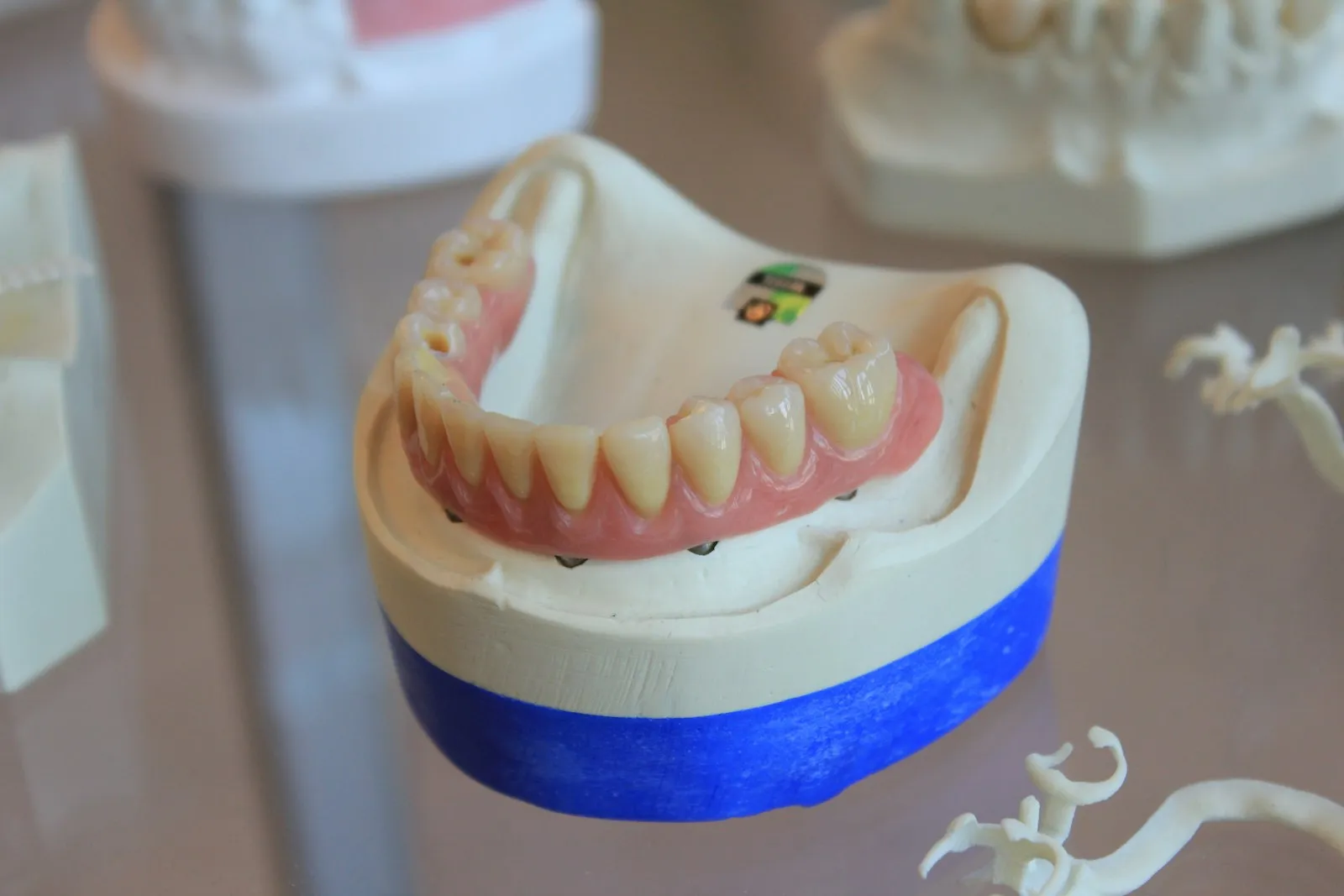
The plan starts with the teeth, not the implants
It is natural to think of full-arch treatment as a surgical question — how many implants, placed where. In practice the sequence runs the other way. The finished teeth are designed first: how they should look, where the bite meets, how much lip support they need to give. Only then is it clear where implants have to sit in order to carry that design.
This is why an assessment asks what you want to achieve and not only what is missing. A jaw that has been without teeth for years has usually lost height as well as width, and a bridge that restores the bite may also need to restore facial support. Those requirements shape the plan.
How many implants
Between four and six per arch is the common range, and the number follows the bone rather than a price tier. Four well-placed implants in sound bone can carry a full arch. Six spread the load further and shorten the spans in the bridge, which is often preferable where the bone allows and the bite is heavy.
Where the upper jaw has resorbed severely, neither may be possible in the usual positions, and the discussion moves to grafting, a sinus lift, or zygomatic anchorage in the cheekbone. That is a different conversation with a different risk profile, and it should be had explicitly.
What happens afterwards
A fixed bridge on implants is not maintenance-free. It needs daily cleaning underneath, specific tools to do that properly, and professional review at intervals the clinical team sets. Implants can develop problems around them, and those problems are far more manageable when they are found early.
Anyone describing full-arch implants as a permanent solution requiring nothing further is not describing implant treatment accurately.
Getting an assessment
Send a recent CBCT scan or panoramic radiograph, photographs of your smile and bite, and a note on what you would like to achieve. The clinical team at Taki Dent can review it and prepare a preliminary outline with a cost range. A final plan is confirmed after clinical examination and radiological assessment at the clinic.