Why clinicians choose Nobel Biocare systems — and when they do not
Premium implants cost more and patients want to know what the money buys. The honest answer is not "better titanium" — it is documentation, component availability and a range wide enough to fit the jaw rather than the other way round.

What this article establishes
- The metal is not the differentiator; documentation and component supply are
- A wide range lets the system follow your anatomy instead of your anatomy following the system
- Long-term parts availability is what protects you in year ten, not year one
The question behind the question
When a patient asks why a clinic uses Nobel Biocare, they are almost never asking about titanium. They are asking why one quote is higher than another, and whether the difference is real or theatre.
It deserves a straight answer, and the straight answer is not that the implant is made of better metal. Commercially available implants are made from titanium alloys or zirconia to established specifications, and they carry regulatory clearances — FDA 510(k), CE marking under the EU medical device regime, manufacturing to ISO 13485 — that set a floor everyone sells above.
So the premium is not buying you a fundamentally different object. It is buying four other things, and whether they matter depends on your case.
What the premium actually buys
1. Documentation you can check
The published evidence base is the clearest difference between established and unknown systems.
Long-term data across implant systems generally puts 10-year survival at 96.4%. For specific Nobel designs there are independent series — a single-centre retrospective analysis of 1,001 consecutively placed NobelActive implants, and a seven-year cohort in patients carrying local and systemic risk factors.
Note what those two studies have in common: “consecutively placed” and “with risk factors”. Those phrases mean the authors reported every implant in order and did not exclude the difficult patients. That is what separates a study from a highlight reel, and it is exactly the evidence a newer or cheaper system does not yet have — not because it is bad, but because a decade has not passed.
You are, in part, paying for time that has already elapsed.
2. A range wide enough to follow your anatomy
This one matters more day to day than the evidence does.
A manufacturer with several body shapes, several diameters, several connections and a deep restorative catalogue lets the treating team pick the implant that fits your bone. A manufacturer with one line requires your bone to fit the implant.
That is the practical argument the surgeon at Taki Dent would give if you asked him directly: in a full arch it is completely normal to want a condensing implant where the bone is soft and a parallel-walled one where it is dense, in the same jaw, on the same day. A narrow catalogue turns that into a compromise.
3. Components that still exist in ten years
The most underrated factor in the entire decision, and the one patients understand last.
Implants fail rarely. Screws loosen, crowns fracture and abutments need replacing far more often than fixtures come out. When that happens, a dentist near you needs a component that fits the connection in your jaw.
A manufacturer that has been supplying the same connection for decades, in most countries, is a very different proposition from a brand that may not be trading when you need the part. This is why records that identify the system, its dimensions and its positions are worth insisting on — with them a repair is routine, without them it becomes detective work.
If you are treated abroad, this is the single most predictable long-term risk, and it is mitigated by brand continuity plus paperwork rather than by anything clinical.
4. A defined protocol, where the system is one
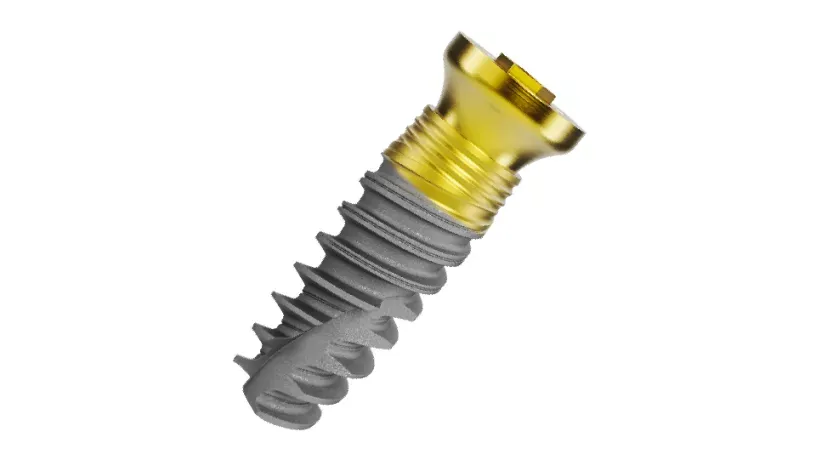
Some systems are an implant. N1 is described by its manufacturer as a complete system — a dedicated site-preparation protocol, a trioval implant body and matching restorative components — which means a clinic adopting it has changed how it prepares the site, not just what it puts in.
That is a real commitment, and it is why a clinic either works that way or does not.
Where another system is the better answer
A page that only argued one way would not be worth reading, so here are the honest limits.
Where cost genuinely decides treatment. For a patient who can have four implants with a well-documented mid-market system or two with a premium one, four is very often the better clinical outcome. Spreading load across more supports beats a brand name on fewer.
Where a specific competitor design fits better. Other manufacturers have designs with real advantages in particular situations, and a clinician who cannot name any of them is not comparing, they are selling.
Where the local market decides parts availability. If you live somewhere a different manufacturer dominates, the components near you are theirs. That is a legitimate argument for using what your own dentist can service.
Where the clinic’s protocol is built around something else. A surgeon working confidently within a system they know well produces better results than the same surgeon using a “better” system they use rarely. Familiarity is a clinical variable, and it is usually invisible in a brochure.
What “premium” costs in context
Worth putting numbers around the shape of it, without quoting prices this site cannot stand behind for every market.
The fixture is typically the smaller part of what you pay for a single implant tooth. The abutment, the crown, the surgical time and the imaging together usually exceed it. So the difference between a premium fixture and a mid-market one, expressed as a share of the total treatment, is smaller than patients assume when they see the two brand prices side by side.
That cuts both ways. It means the premium is less painful than it looks — and it means anyone presenting the implant brand as the main driver of a quote is misdirecting you away from the lines that actually move it, chiefly the restoration and any grafting.
Where the difference becomes material is a full arch, because the fixture cost multiplies by four or six while much of the rest does not. That is precisely the case where the trade-off deserves a real conversation rather than a default.
The tiers below premium
It is not a two-way choice between “premium” and “unknown”, and pretending otherwise is one of the ways this argument gets sold dishonestly.
There is a substantial middle tier of manufacturers with genuine clinical documentation, real regulatory clearances, and international distribution — considerably cheaper than the market leaders and considerably better established than the bottom of the market. For many patients, and particularly for full-arch cases where cost is decisive, a well-documented mid-tier system placed by an excellent surgeon is a better outcome than a premium system placed by a mediocre one.
What is genuinely worth avoiding is the bottom tier: implants copied dimensionally from established designs, with little published follow-up and uncertain distribution. The risk there is not the metal. It is that in ten years the manufacturer may not exist, and the component you need may not be obtainable anywhere.
That is the argument, reduced to its honest core: you are largely buying the probability that the part still exists when you need it, plus a documented record of what happens over time.
What does not justify the premium
Three claims worth refusing:
“Our implants never fail.” Every implant system fails sometimes. A clinic that says otherwise either does not follow up its patients or is not telling you the truth.
“Premium implants integrate faster.” Healing is biological. Surface treatments influence it at the margins; they do not compress it into a promise.
“The brand guarantees the result.” The brand is one variable in a decision that also includes where the implant is placed, how it is loaded, who restores it and who maintains it. On the evidence, those matter more.
How this platform is positioned, plainly
This site is built around Nobel Biocare systems and its clinical partner uses them, so treat what you have just read as a case put by an interested party — and then check it. The specification claims here can be verified against an independent manufacturer profile and a plain-English explanation of what FDA, CE and ISO clearances mean, both linked on every system page.
The claim we are not making is that Nobel Biocare implants will outlast a competitor’s in your jaw. No study establishes that, because randomising thousands of patients across brands for a decade is not something anyone funds. Any site telling you otherwise is extrapolating well past its evidence.
What to ask your own clinic
- Which system are you planning for me, and why that one for my scan?
- What else did you consider, and what ruled it out? A clinician who has genuinely compared can answer this in a sentence.
- What will I be given in writing about what was placed?
- If a component needs replacing in ten years, where does my dentist get it?
A clinic that answers all four without hesitation has told you more than any brand page can, this one included.
A final diagnosis and treatment plan can only be confirmed after clinical examination and appropriate radiological assessment. Send a recent panoramic radiograph or CBCT scan and the clinical team at Taki Dent will set out which system your case points towards — and, more usefully, what the alternatives were.