What the evidence actually says about Nobel implant survival rates
Clinics quote survival figures constantly and cite almost nothing. Here are the real numbers, where they come from, and — the part nobody advertises — what "survival" is actually counting.
What this article establishes
- A meta-analysis puts 10-year implant survival at 96.4% across systems, not for any one brand
- Survival counts an implant still being in the jaw — not that the treatment was problem-free
- Your smoking, bone quality and maintenance move the odds more than the brand does
The number you have probably been quoted
Somewhere in your research you will have met “98% success”. It appears on clinic websites in every country, usually without a citation, sometimes attached to a brand, occasionally attached to a particular clinic as though they had measured it themselves over a decade of practice.
The honest version is more interesting, and it comes from published work rather than a homepage.
A systematic review and meta-analysis of long-term data put 10-year implant survival at 96.4% (95% confidence interval 95.2–97.5) at implant level. That figure is across implant systems generally, not for any one manufacturer, and it is the number a clinician would recognise if you quoted it back to them.
Two things follow from that immediately. The first is that the honest number is a little lower than the marketing number, which is normal. The second is more useful: the published evidence is mostly not brand-specific, because the differences between well-documented implant systems are small compared with the differences between the people they are placed in.
What “survival” is counting
This is the part that gets left out of every advertisement, and it changes how you should read every percentage above.
Survival means the implant is still in the jaw. It does not mean nothing went wrong. An implant that needed antibiotics for infection around it, lost a few millimetres of bone height, had its crown remade twice and now sits in a gum that bleeds when you brush it is, by this measure, a surviving implant. It counts in the 96.4%.
Reviewers of the All-on-4 literature make this point explicitly — that the evidence base needs clearer definitions of success versus survival, precisely because peri-implant disease is common enough to matter. When you see a survival percentage, you are reading the least demanding measure available.
“Success” is the stricter measure. Definitions vary between studies, which is part of the problem, but it generally requires the implant to be stable, free of infection, with bone loss inside an accepted range and no ongoing symptoms. Success rates are always lower than survival rates, and they are quoted far less often, for obvious reasons.
If a clinic cannot tell you which of the two they are quoting, they are quoting neither. They are quoting marketing.
What the brand-specific evidence looks like
For NobelActive specifically, there is a single-centre retrospective analysis of 1,001 consecutively placed implants, and a separate seven-year cohort study of a tapered high-primary-stability implant in patients who had local and systemic risk factors — the harder group, chosen deliberately.
That second study is the more useful one for most readers, and it is worth understanding why. “Consecutively placed” and “with risk factors” are the two phrases that stop a case series being a highlight reel. A study reporting every implant placed in order — including the ones in smokers, in diabetics, in the difficult sites — is describing something much closer to a working clinic than a paper that quietly selected its cases.
The manufacturer also publishes its own aggregated figures across its clinical library. Those are worth reading, and they are worth reading as what they are: material assembled by the company that makes the product. That is not an accusation — manufacturer data is a legitimate source and is labelled as such throughout this site — but it sits differently from an independent cohort with seven years of follow-up in unselected patients.
What none of it establishes is that one manufacturer’s implant will outlast another’s in your jaw. That study does not exist, because it would need to randomise thousands of patients across brands and follow them for a decade, and nobody is funding it.
What actually moves your odds
In rough order of how much they matter:
Smoking
The single most consistent risk factor in the implant literature. It affects healing at the time of placement and the health of the tissue around the implant for as long as you have it. No implant design compensates for it, and no clinic can promise around it.
If you smoke and are considering implants, the useful conversation is not whether you can have them — usually you can — but what the increased risk actually is for your case and what reducing or stopping would change.
Bone quality and quantity at the site
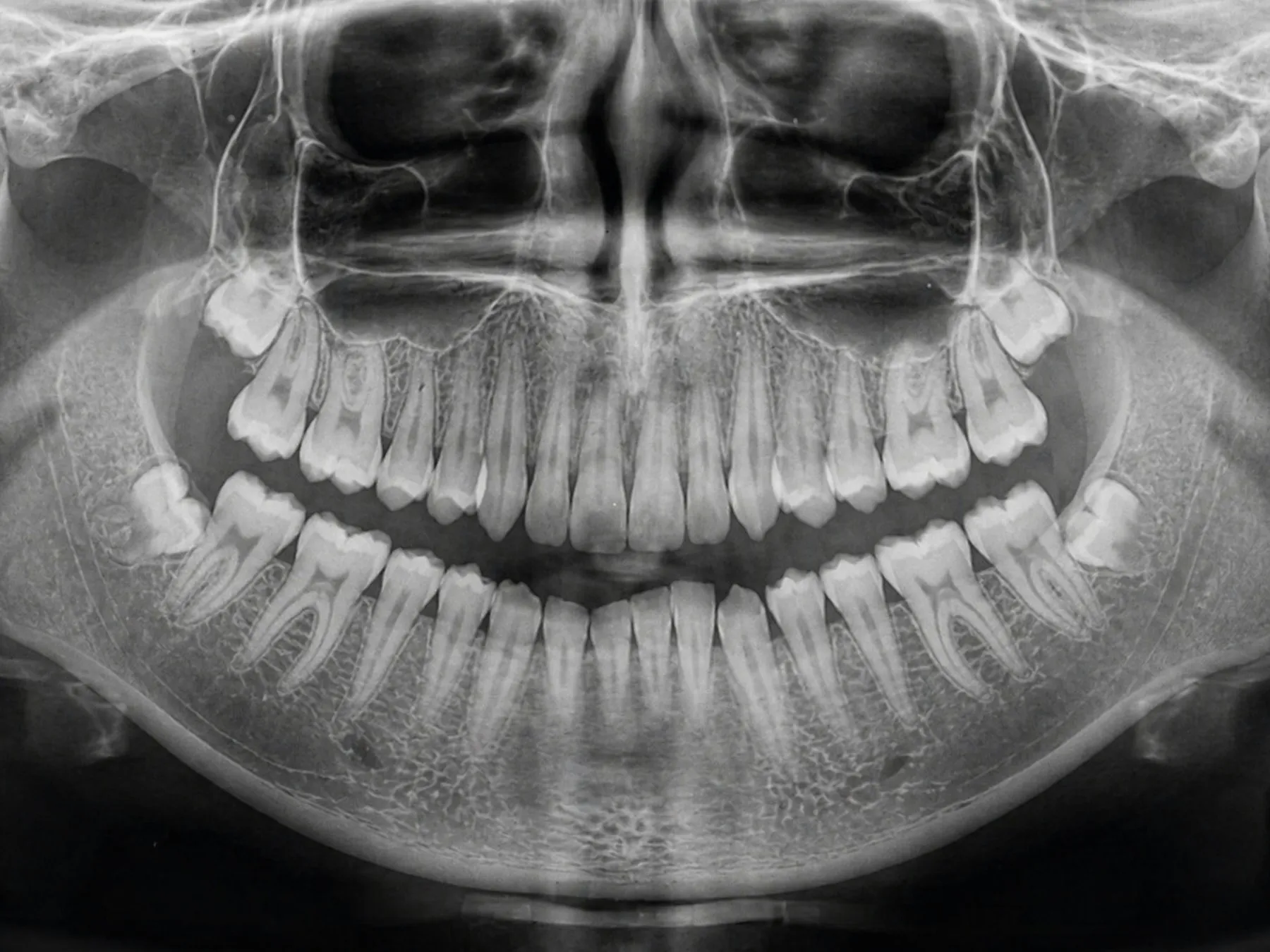
The amount of bone available, and how dense it is, decides whether an implant can sit tightly on the day it is placed. This is why a CBCT scan is the difference between a plan and a guess: a panoramic radiograph shows height reasonably and width not at all, and width is usually what is missing.
It is also why the clinical team at Taki Dent asks for imaging before saying anything specific about a case. A quote produced without a scan has an assumption inside it, and the assumption is usually about bone.
Whether the implant was loaded too early
Fitting a tooth onto an implant before it is stable enough is the most avoidable failure in implant dentistry. Stability is measured during your surgery — as insertion torque, sometimes also as a resonance frequency reading — and that measurement is what should decide whether a temporary tooth goes on straight away.
A clinic that promises same-day teeth before seeing your jaw is promising something it cannot know. A clinic that says “we will fit a temporary if the reading supports it, and let it heal if it does not” is describing careful practice.
Maintenance afterwards
Implants are not maintenance-free. They need daily cleaning, the right tools for cleaning underneath a bridge, and professional review at intervals the clinical team sets. Problems around implants are far more manageable when they are found early, and nobody finds them early without looking for them.
This is the factor patients most often discover late, and it is the one most within their control.
Diabetes, bisphosphonate medication, previous radiotherapy
All three change the surgical calculus, sometimes substantially. They are on the assessment form on this site for that reason, not for form’s sake — the answers change what the clinical team can safely advise, and leaving them out helps nobody.
Why the clinic matters more than the catalogue
Here is the conclusion the evidence actually supports, and it is not the one a manufacturer would write.
Given two well-documented implant systems, the variable that moves your outcome is not which of them goes in. It is whether the site was assessed properly beforehand, whether the implant was placed in the right position for the tooth that has to sit on it, whether the loading decision was made on a measurement rather than a promise, and whether anyone looks at it again in the years afterwards.
That is a statement about surgical and restorative judgement, not about a product. It is also why this platform is built around a single clinical partner rather than a directory: the questions worth asking are about the team, and they only have answers if you know who the team is.
At Taki Dent the implant surgery is carried out by an oral and maxillofacial surgeon and the restorative side is planned by a specialist prosthodontist, together, from the finished teeth backwards. That division of labour is ordinary in good implant dentistry and surprisingly uncommon in clinics that market on price.
How to read any clinic’s numbers
Three questions. They work on any clinic in any country, including this one’s partner:
- Whose figure is it? A published study, or the clinic’s own count? Both are legitimate — but they are not the same claim, and only one is checkable by you.
- Survival or success? If they cannot answer, you have learned something more useful than the number.
- Over what period, and in whom? A 98% figure over two years in selected patients and a 96% figure over ten years in consecutive patients are not comparable, and the second is the better result.
A clinic that answers all three comfortably has told you more about itself than the percentage ever could.
What this means for your own case
None of these numbers predict your outcome. They describe populations. You are one person with a particular jaw, a particular medical history and a particular set of habits, and the published range is wide enough that your position within it is decided mostly by the factors above.
What the numbers do give you is a reasonable expectation and a set of questions. Implants are a very good treatment with a well-documented track record, and they are not a permanent solution requiring nothing further — both halves of that sentence are true, and clinics tend to tell you only the one that suits them.
A final diagnosis and treatment plan can only be confirmed after clinical examination and appropriate radiological assessment. Send a recent panoramic radiograph or CBCT scan with a note on your medical history, and the clinical team at Taki Dent can tell you which of the factors above apply to you — which is the only version of this question that has a real answer.