Replacing a failed dental implant — what the second attempt involves
An implant that failed once can usually be replaced, but not on the same day and not without understanding why the first one failed. That second question is the whole treatment.
What this article establishes
- Removing a failed implant is usually straightforward; rebuilding the site is the real work
- A replacement placed without establishing the cause of failure tends to repeat it
- Most sites need grafting and a healing period before a second implant can be placed
First, what “failed” actually means
The word covers three different situations and they need separating, because the treatment differs completely.
Early failure. The implant never integrated. It was placed, the bone did not lock onto it, and within weeks or a few months it is mobile. Frustrating, usually straightforward to redo.
Late failure. The implant integrated, worked for years, then progressively lost the bone around it — usually peri-implantitis, sometimes overload. This is the common one, and the one where the cause matters most.
Component failure, not implant failure. The fixture is perfectly sound; the screw fractured or the crown broke. This is not a failed implant at all, and it is worth ruling out first because the repair is far smaller.
A dentist should tell you which of the three you are in before anything is planned. If nobody has said, ask.
Why the second attempt starts with a question
A replacement implant placed into the same site, in the same way, for a patient whose circumstances have not changed, is quite likely to do the same thing.
So the useful first move is not removal. It is working out why:
- Was there enough bone, or was the site marginal from the start?
- Was it loaded too early, before the stability reading supported it?
- Is there peri-implant infection, and is it also affecting neighbouring teeth?
- Does the bite concentrate force on that position — do you grind?
- Are there systemic factors: smoking, uncontrolled diabetes, medication affecting bone?
- Was the implant in the right position for the tooth that sat on it, or was the crown compensating for an implant placed where the bone was convenient?
That last one is more common than clinics like to discuss. An implant placed for surgical convenience rather than prosthetic need produces a crown at an awkward angle, which concentrates force in ways the design did not intend.
This is exactly why the surgical and restorative sides are planned together at Taki Dent — the prosthodontist designs the finished teeth and the surgeon places implants to serve that design. In revision cases that sequencing matters more than in first-time treatment, because you are correcting something as well as replacing it.
Removing the implant
Usually the least difficult part, which surprises people.
A failed implant that has lost integration is often removable with a reverse-torque device — turned out much as it went in, without cutting bone. Where it is partially integrated, a trephine or piezoelectric instruments are used to release it with as little bone loss as possible.
The goal throughout is preservation. Every millimetre of bone kept during removal is a millimetre that does not need rebuilding afterwards, and the surgeon’s technique here largely determines how big the next stage is.
Rebuilding the site
This is the real work, and the reason revision treatment takes longer than first-time treatment.
A site that has lost an implant has usually lost bone — from the failure itself, from infection, or during removal. Placing a new implant into that defect immediately is rarely possible.
The typical sequence:
- Remove the implant and clean the site thoroughly. Any infected tissue is removed.
- Graft the defect, often at the same visit, sometimes after a period of healing if infection was significant.
- Wait. Months, while the graft matures. This is biological time and cannot be compressed.
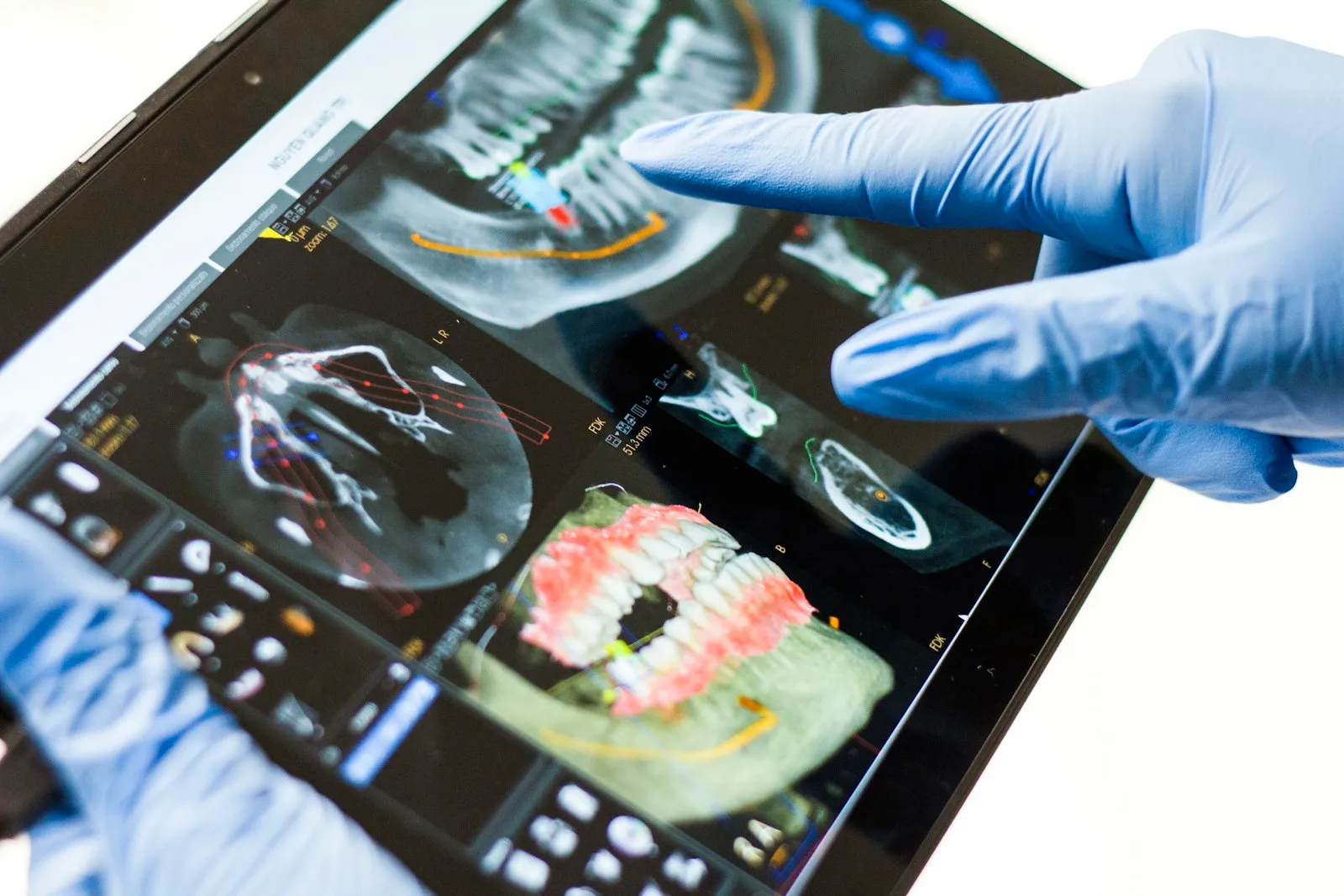
- Reassess with a CBCT scan to confirm the site can now hold an implant.
- Place the new implant, frequently in a slightly different position and often a different diameter or design from the first.
Occasionally, where the failure was early and the site is clean, removal and replacement can happen in one visit. That is the exception rather than the plan.
Why the replacement is often a different implant
Two reasons, and neither is a criticism of the first choice.
The site has changed. Grafted bone behaves differently from native bone. A design that achieves good stability in a healed graft may not be the one used originally.
The first choice may have been part of the problem. If a straight-walled implant did not achieve stability in soft bone, a condensing design is a reasonable reconsideration. If the original was placed in a compromised position, the new one goes where the prosthetic plan wants it — which may change the diameter available.
This is also where knowing the original system helps. Identifying what was placed tells the team what the site has already been through, and occasionally allows existing restorative components to be reused.
What it costs, honestly
More than the original, and that deserves saying plainly rather than discovering.
You are typically paying for removal, grafting, a healing period, a second CBCT, the new implant and a new restoration. Where the original work was a full arch, the bridge may need remaking.
Where the failure happened at another clinic, expect to pay for it. Warranty arrangements rarely transfer between practices and almost never across borders. If your original clinic is still trading and the failure is recent, ask them first — some will contribute.
Peri-implantitis, since it causes most late failures
If your implant worked for years and then deteriorated, this is probably what happened, and it is worth understanding because it changes what the replacement needs to avoid.
It begins as inflammation of the soft tissue around the implant — bleeding when brushed, some swelling, often no pain at all. Left alone it progresses into the bone, which recedes around the implant. Because it is usually painless in its early stages, patients frequently notice only when the implant becomes mobile, by which point the bone loss is substantial.
Two features make it different from gum disease around a natural tooth. It tends to progress faster once established. And an implant surface, unlike a root, cannot be cleaned by the body’s own mechanisms — bacteria colonising it are difficult to remove and difficult to keep away.
The relevance to revision treatment is direct. If peri-implantitis took the first implant, the replacement is going into a mouth where the conditions that allowed it still exist. Addressing those conditions — cleaning regime, review interval, smoking, the design of the restoration and whether it can actually be cleaned underneath — is part of the treatment rather than advice attached to it.
A restoration that cannot be cleaned properly is a recurring cause, and it is a restorative design failure rather than a surgical one. It is another reason the prosthodontic side matters as much as the surgical side in revision cases.
What to expect emotionally, which nobody mentions
A failed implant lands harder than most dental problems, and it is worth naming.
You paid a significant sum, you went through surgery, you waited months, and it did not work. If the treatment was abroad there is often a sense of having been careless. Patients frequently arrive at a second opinion apologetic, as though the failure were a personal error.
It usually is not. Implants fail in every practice in every country, including excellent ones. The published figures put long-term survival in the mid-nineties per cent, which necessarily means a few per cent do not survive — and someone is in that few.
What is worth examining, without self-blame, is whether anything modifiable contributed: smoking, uncontrolled diabetes, a restoration that could not be cleaned, a maintenance schedule nobody explained. Those are the things a second attempt can address. Being told plainly which of them applied to you is more useful than reassurance.
What changes your odds the second time
Everything from the list above that is within reach:
- Stopping smoking, which affects revision cases even more than first attempts
- Getting diabetes under control before surgery rather than after
- A night guard, if grinding contributed
- A maintenance schedule you actually keep — implants that are reviewed regularly do better, and peri-implantitis found early is manageable in a way that peri-implantitis found late is not
- Accepting the longer timeline rather than pushing for speed, which is what produced the failure in a good proportion of revision cases
How long you wait between attempts
The most common question after cost, and the answer is uncomfortable but consistent.
If the implant failed early and the site is clean, replacement can sometimes follow removal within weeks — occasionally at the same visit. That is the best case and it is not the common one.
Where infection was involved, the site is usually left to settle for a period before grafting, then the graft matures for several months, then the implant is placed, then it integrates before the tooth goes on. Nine to twelve months from removal to finished restoration is a realistic expectation for a straightforward revision, and complex cases run longer.
Patients often push to compress this, understandably — they have already waited once and got nothing for it. Compressing it is also, in a meaningful proportion of revision cases, what produced the first failure. The second attempt is the one to be patient with.
What to send
A CBCT scan if you have one, a panoramic radiograph if not, and whatever you know about the original treatment — when, where, which system, and what you were told about why it failed.
If you have nothing, send an image of the area anyway. A radiograph showing bone levels around the existing implant tells the clinical team most of what they need to know about the scale of the problem.
A final diagnosis and treatment plan can only be confirmed after clinical examination and appropriate radiological assessment. With imaging in front of them, the clinical team at Taki Dent can set out whether the site can be rebuilt, what sequence it would take, and — the part worth most in a revision case — what they think went wrong the first time.